

KION follows a systematic, Group-wide approach to implementing its sustainability strategy. Anchoring sustainability in the Group strategy “Playing to Win” is of central importance here, as it not only ensures profitable growth, but also strengthens responsibility toward employees, the environment, and society.
Double Materiality Analysis
STILL aligns its sustainability activities with the results of the KION double materiality analysis (DMA), which is based on the concept of distinguishing between immaterial and material impacts, risks, and opportunities (IROs). The double materiality analysis evaluates both the environmental and social impacts of business activities (“inside-out”) and the associated financial risks and opportunities (“outside-in”).
The comprehensive process for identifying and assessing the material IROs was carried out in fiscal 2024 at Group level with the involvement of the KION ITS EMEA Operating Unit. In fiscal 2025, the DMA process was revised to ensure alignment with the newly defined risk management assessment criteria for the financial impact and probability of occurrence of risks.
The material IROs are assigned to the ESRS topics “E1 Climate change,” “E2 Pollution,” “E5 Resource use and circular economy,” “S1 Own workforce,” “S2 Workers in the value chain,” and “G1 Governance.” The material IROs are managed either through the objectives of the KION sustainability strategy or through programs in the seven action fields. Key findings and newly identified, company-specific topics are taken into account when further developing the sustainability strategy and defining targets.
An overview of the material sustainability aspects in the context of the topic-specific ESRS (IROs), as well as details on the methodology, can be found in the Group Sustainability Report in the 2025 Annual Report.
Action Fields of the Sustainability Strategy
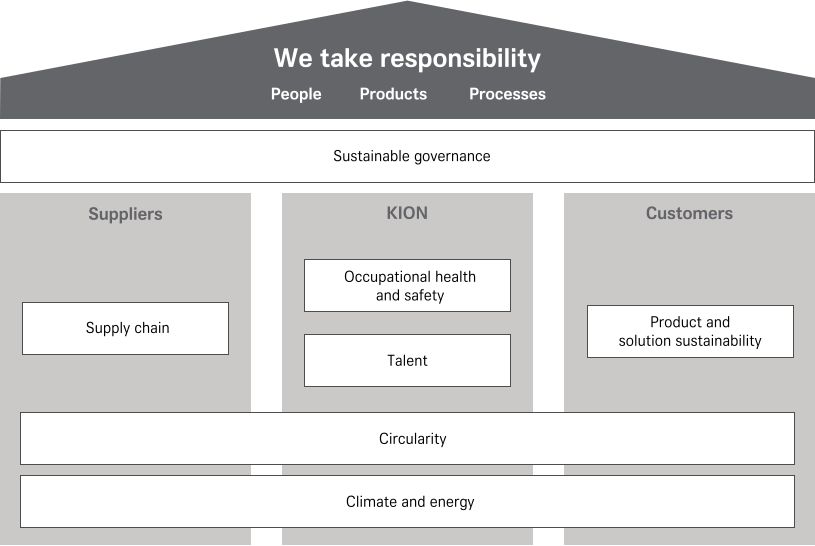
In implementing its sustainability strategy, STILL follows the systematic approach defined by KION. The sustainability approach of STILL is defined through overarching targets and initiatives under the three strategic dimensions of People, Products, and Processes, as well as the overall principle of “taking responsibility.” These three dimensions provide the framework for the business’s seven targeted areas of action on sustainability. In line with the KION sustainability strategy and the double materiality analysis, STILL pursues specific programs in these action fields – with defined targets, measures, and corresponding monitoring – in order to meet stakeholder expectations and ensure compliance with political and legislative requirements.
The Group-wide sustainability strategy was further developed again in fiscal 2025. The “Product and solution safety” action field will in future be managed by the technology organization (CTO/Chief Technology Officer) of KION as part of the Group’s strategic technology agenda. All other objectives within the framework of the Group-wide sustainability strategy were pursued unchanged compared to the previous year. The ongoing development of the KION sustainability strategy includes defining and specifying targets, incorporating the results of the double materiality analysis, aligning with external requirements, and coordinating with internal stakeholders, both at Group level and within the Operating Units. The strategic objectives that STILL, as part of KION, is pursuing can be found under “Key Targets.”
As part of KION, STILL complies with the principles and policies for sustainable business practices in place across the group. In addition, sustainability criteria are firmly embedded in day-to-day operations through company-specific guidelines and tools. These include guidelines for integrated HSE (health, safety, and environment) management and certification in line with labor and environmental standards (ISO 14001, ISO 45001, and ISO 50001).
Company
Based in Hamburg (Germany), STILL is a leading supplier of intralogistics solutions with a portfolio that includes forklift trucks, warehouse technology, networked systems, and support services. Founded in 1920 by Hans Still, the company’s hallmarks include targeted, tailor-made solutions backed up by outstanding service. STILL has set itself the goal of making intralogistics “smart.” To this end, the company develops intelligent solutions with the aim of creating warehouse management workflows that are smoother and more efficient. These workflows provide more effective protection for workers’ health while ensuring the company can meet the highest standards of sustainability. STILL is thus forging ahead with new solutions for electric vehicles and automation – from fleet and energy management through circularity, which refers to the approach of consistently conserving resources and recycling the materials used. The ethos of STILL is to be a smart and dependable intralogistics partner. The company offers a wide-ranging portfolio of trucks, systems, and consulting services that ensure every customer receives custom solutions designed to meet their precise needs.
In addition to selling new products, STILL also offers used trucks and rental options. With an extensive fleet of 34,000 rental trucks, the company has a solution for every customer requirement.
Sustainability Organization
Since 2023, the Chief People & Sustainability Officer (CPSO) within the Executive Board of KION GROUP AG has been responsible for human resources and sustainability, including occupational safety and health. In this role, her responsibilities include ensuring the development and implementation of the sustainability strategy in line with the company’s objectives. She also chairs the Sustainability Council, whose members include those responsible for the seven action fields, the sustainability coordinators of the Operating Units and functions, and members of the central sustainability management team. STILL is represented on the Sustainability Council as part of the KION ITS EMEA Operating Unit.
Progress is regularly reviewed by the sustainability coordinators of the Operating Units, the leaders responsible for the action fields, the central sustainability management team, and special committees. KION ITS EMEA and the relevant central functions regularly report their progress to the Sustainability Council. These reports are also discussed by the Executive Board as part of Group-wide strategy development and implementation. Further information on the governance structure can be found in the Group Sustainability Report in the 2025 Annual Report.
Initiatives and Ratings
In 2023, KION committed to the Science Based Targets initiative (SBTi) and, on this basis, set itself the long-term climate target of achieving net-zero greenhouse gas emissions (GHG emissions) across its value chain by 2050. Significant interim targets are being pursued for 2030 (see targets in the Group Sustainability Report in the 2025 Annual Report). The Group is thus following a scientifically sound framework and is committed to the target of the 2015 Paris Climate Agreement to limit global warming to 1.5 °C above pre-industrial levels. The climate management targets were formally validated by the SBTi in 2024. KION’s voluntary commitment is publicly available in the SBTi target overview and is also communicated internally to its employees as well as to customers and suppliers.
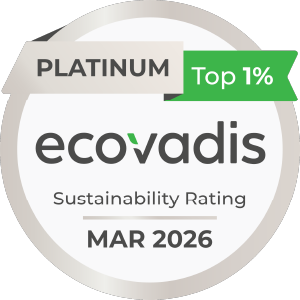
Since 2012, STILL has been regularly audited and certified as a supplier with regard to corporate responsibility by independent service provider EcoVadis. Having achieved an impressive “Gold” rating from the internationally recognized rating agency in years gone by, STILL was awarded the highest rating level, Platinum, by EcoVadis for the fourth time in a row. With 91 out of 100 possible points, STILL remains among the top 1 percent of all evaluated companies and once again surpasses its own result from the previous year. STILL received above-average scores in all four categories: “Environment,” “Labor and human rights,” “Ethics,” and “Sustainable procurement.” The EcoVadis analysis system covers 21 criteria in these four areas. The methodology is based on international sustainability standards such as the Global Reporting Initiative (GRI), the conventions of the International Labour Organization (ILO), the UN Global Compact, the UN Guiding Principles on Business and Human Rights, and the sustainability guideline ISO 26000.
A STILL business unit in Bremen received another sustainability award in 2025 for a newly constructed campus encompassing 54,000 square meters of logistics and workshop space. The German Sustainable Building Council (DGNB) awarded the entire campus the Platinum certificate – the highest achievable sustainability award for particularly future-proof and resource-efficient buildings throughout their entire life cycle. All buildings also meet the Effizienzhaus 40 energy standard and are equipped with large-scale photovoltaic systems. The combined logistics and workshop areas enable the refurbishment of used forklifts for the secondary market, the management of a large rental fleet, as well as administration and sales. In this way, STILL strengthens its strategic focus on the circular economy while simultaneously increasing operational efficiency.
STILL is also part of the Blue Competence initiative organized by the German Mechanical Engineering Industry Association (VDMA), which aims to promote sustainability in mechanical and plant engineering and inform the industry about sustainable solutions. As a partner to the initiative, STILL agrees to comply with the initiative’s 12 guiding principles for sustainability in the mechanical and plant engineering industry.
In addition, STILL is part of UmweltPartnerschaft Hamburg, a network of companies committed to protecting our climate and environment in the long term. Faced with the realities of climate change, the network particularly wants to help advance the energy transition with measures such as reducing energy consumption and improving material flow management in order to make more efficient use of available resources. Hamburg aims to gradually reduce its CO2 emissions by at least 98 percent by 2040 compared with 1990. By 2030, the city’s CO2 emissions are to be reduced by 70 percent compared with 1990. As an active member of UmweltPartnerschaft Hamburg, STILL is playing its part in combating climate change by implementing its energy policy in line with its DIN EN ISO 50001 certification.